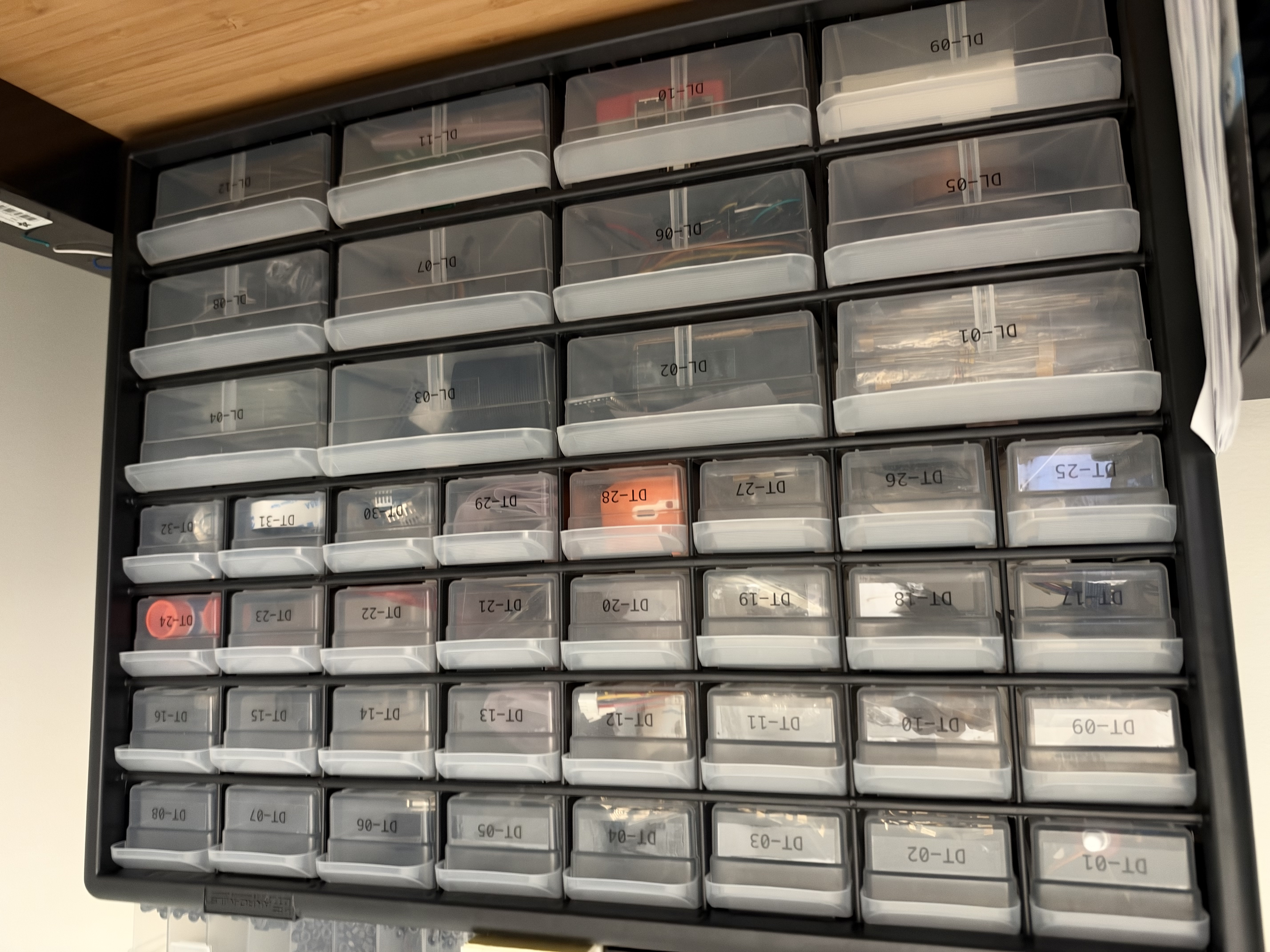
Over the years, I’ve accumulated so many random parts, cables, tools, and other things that it’s been impossible to keep track of them all. So much so that when I’ve started a project, I’ve reordered things I already had on hand because I didn’t remember I had them in the first place.
I explored existing inventory software (UnderMyRoof, HomeBox, and many other random iPad apps), but they all seemed like overkill and too complicated for what I needed. My idea was a simple, single-page web app backed by a SQLite database that could run as a Docker container on my NAS. I had existing Node.js scaffolding from previous projects that would work here, but why do it myself when I could have Codex one-shot it?
This was my prompt (typos, incomplete thoughts, and all)…
I have a series of drawers used to store electronics parts, cables, and other hobby tools and materials. I have a mix of tiny drawers, small, medium, and large. I need a way to keep track of what items are in what drawer so that I don't lose track of them.

I need you to build a dead simple single page UI that I can run as a docker container on my Synology NAS (I'll provide a startup script I want to use to launch the container, it will need to be a different IP on that VLAN, but it needs to be a sub interface ofthe bond 2282).

I think maybe nodejs express single page, bootstrap js, and datatables js?

Basically each drawer will be assigned a number, then I can add any amount of parts, tools, components, etc to each drawer. Each "item" will have a name, link (so I know where I purchased it from), and quantity. All item entry, updating, deleting should be done with modals. The table should be searchable. It can be backed with a local sqlite db that we should mount and write to disk.

What else do you need from me to get started?
After some clarifying questions and a little back and forth, we were up and running!
The real challenge was getting all the items cataloged and sorted into bins…
I decided early on that it didn’t matter which items ended up in which bins. Everything should just go where it fits, and as long as it gets cataloged, I can find it again later. (Amazon sorts items in warehouses in a similar way!) Totally unrelated things can end up in the same bin, and it has no effect on anything.
I started cataloging items by hand but realized very quickly that it was going to take me forever to finish, and my motivation was fading.
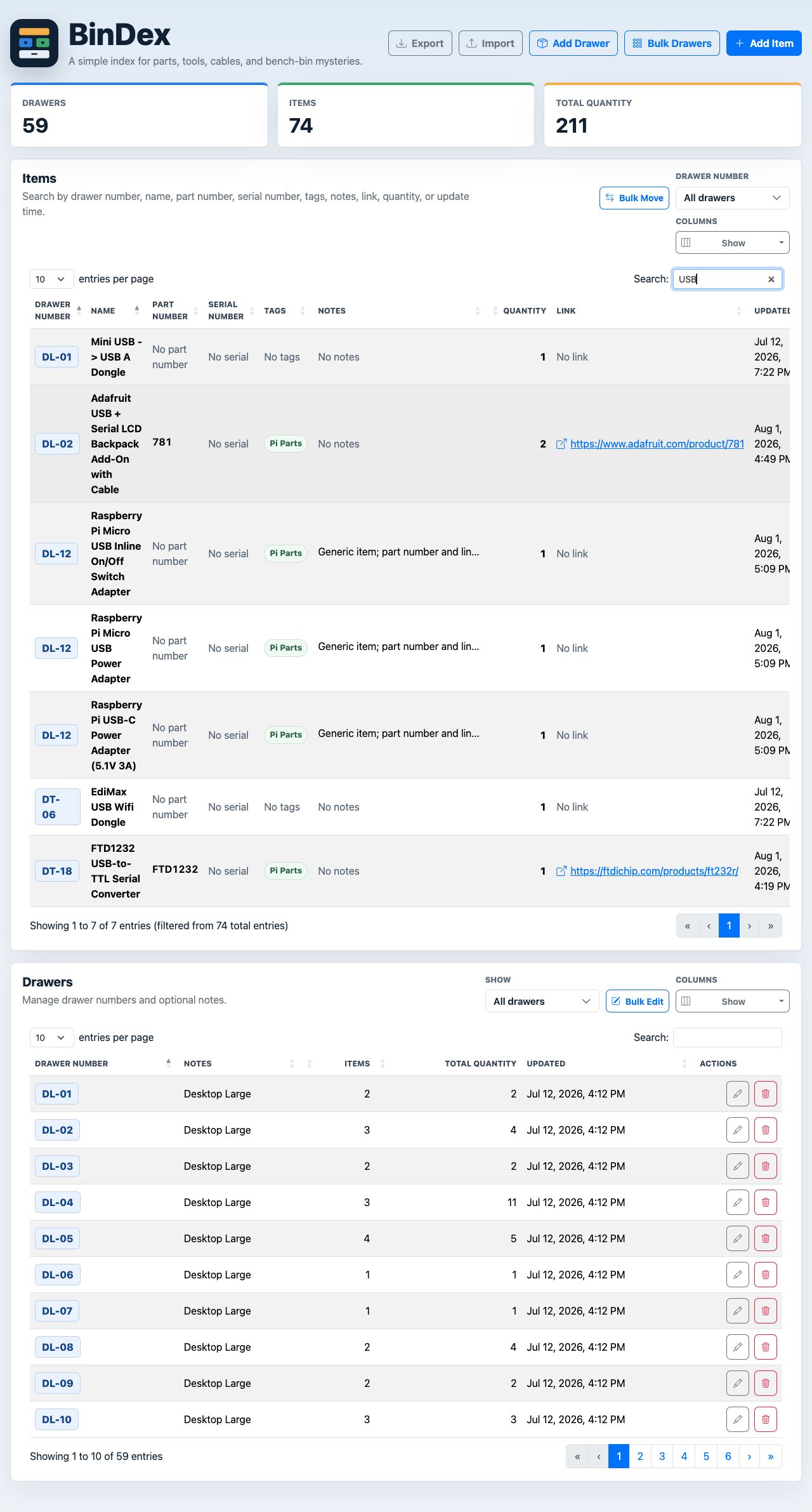
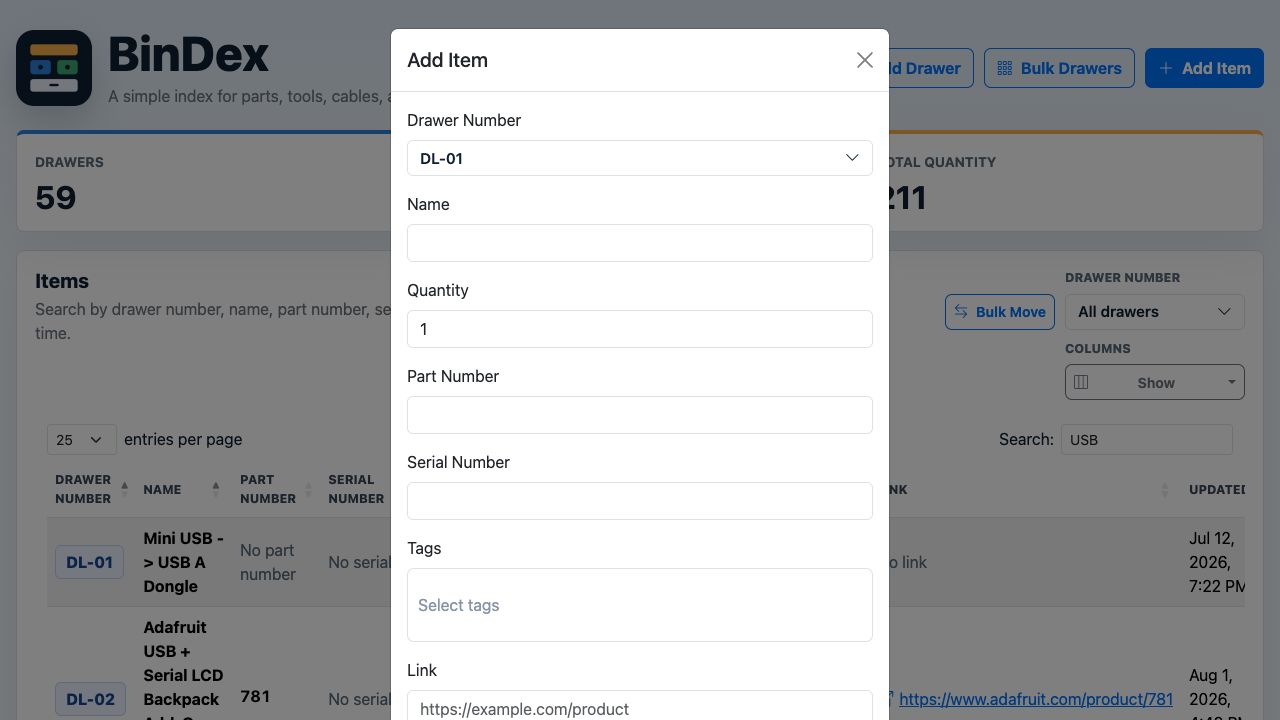
ChatGPT’s new voice mode launched around this time, so I decided to use it as my data entry assistant. I added a very basic API to BinDex so Codex could just use curl to add items instead of clicking around in a browser window.
From there, I read off item names, serial numbers, descriptions, and other useful information, told ChatGPT which bin I was placing each item in, and let it handle the actual data entry for me. It still took a couple of hours to finish, but I was able to focus on the items and bins themselves and offload all the Google searching and typing.
So far, I’ve added 74 items from these desktop bins. I have a handful of drawers and bins full of things that still need to be added, but that’s a problem for a different day!